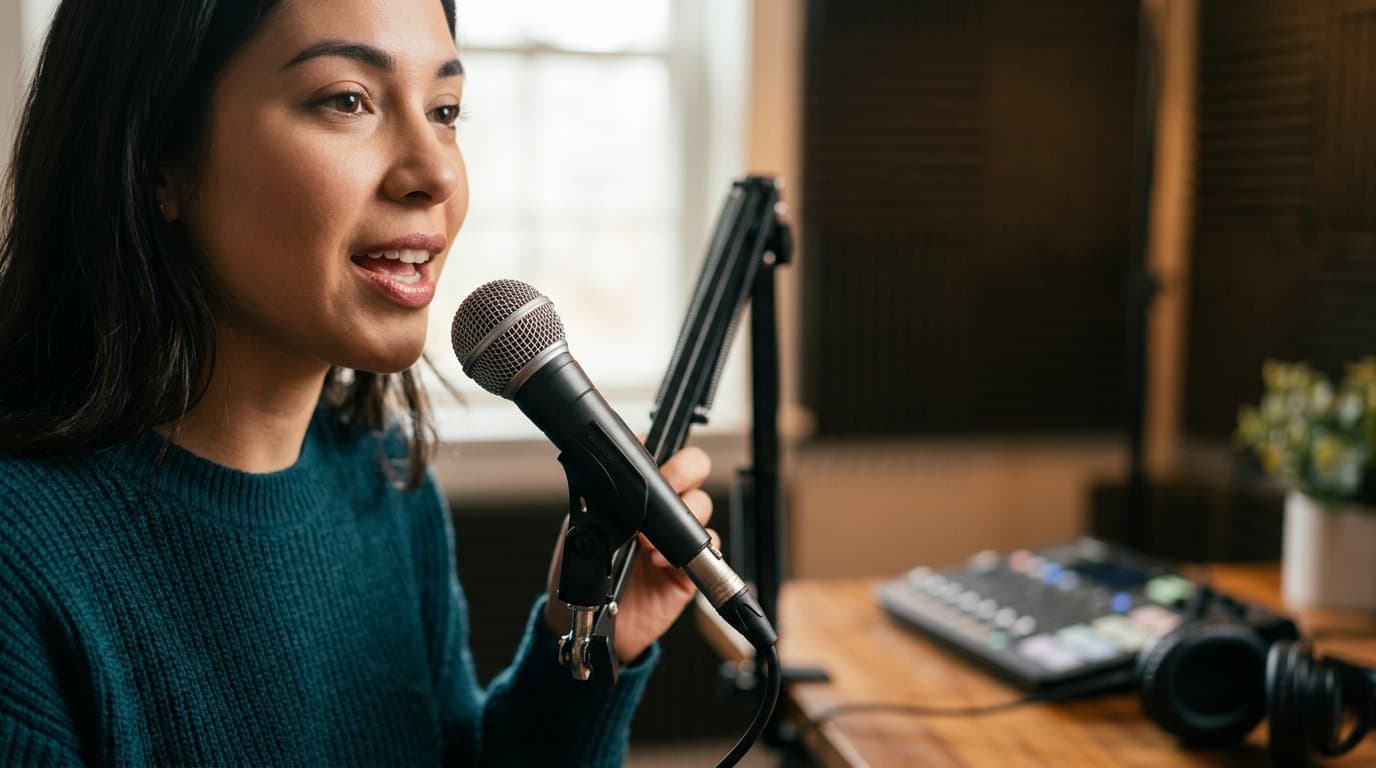
Mastering American pronunciation is often the final hurdle for English learners striving for professional-level fluency. While grammar and vocabulary provide the foundation of communication, the way you produce sounds determines how easily others understand you. In a globalized world where AI search and intent matching are redefining how we process information, the demand for clear, effective communication has never been higher.
What is American Pronunciation?
American English pronunciation refers to the specific speech patterns, vowel shifts, and rhythmic structures used by native speakers in the United States and Canada. Unlike British English, which often features a non-rhotic "r" (where the "r" is silent at the end of words), American English is primarily rhotic. This means the "r" sound is pronounced clearly in words like "car" and "hard."
Beyond individual letters, American pronunciation involves unique melodic patterns and "reductions" that make the language sound fluid. For students preparing for international exams, these nuances are critical. For instance, the official IELTS speaking criteria explicitly evaluate a candidate's ability to use pronunciation features that convey meaning effectively.
Why Pronunciation Matters for English Fluency
Fluency is more than just speed; it is the ability to speak smoothly without effort. If you have to stop and repeat yourself because of a mispronounced vowel, your fluency score—and your confidence—drops.
Research into SEO and content trends for 2026 suggests that clarity and authority are becoming the most valued traits in both digital content and human interaction. In a professional setting, an American accent can help you integrate into North American corporate cultures, while in academic settings, it ensures your ideas aren't lost behind a language barrier.
To see where your current pronunciation stands, you can use modern tools like acsent.ai. The platform provides a diagnostic placement test that identifies your speaking level and weak areas before you begin a focused study plan.
The Most Important American English Sound Patterns
To sound more like a native speaker, you must focus on the specific "entities" of sound that define the American accent.
The American 'R' and 'L'
The "Retroflex R" is a hallmark of American speech. Unlike the trilled "r" in Spanish or the guttural "r" in French, the American "r" is made by curling the tongue back without touching the roof of the mouth. Similarly, the "Dark L" (found at the end of words like "fall" or "pool") requires a slight tension in the back of the throat.
The T-Glottalization and the Flap-T
In American pronunciation, the letter "t" is rarely a sharp "t" when it falls between two vowels. Instead, it becomes a "Flap-T," sounding almost like a quick "d." Words like "water" sound like "wa-der" and "better" sounds like "be-der." Mastering this is a shortcut to sounding more natural.
Word Stress, Sentence Stress, and Intonation
If you pronounce every word with the same emphasis, you will sound like a robot. American English is a stress-timed language, meaning speakers stretch out important words and squeeze unimportant ones.
- Word Stress: Every multi-syllable word has one "loud" syllable. In the word "Photography," the stress is on the "tog."
- Sentence Stress: We usually stress nouns, verbs, and adjectives while de-emphasizing "function" words like "the," "of," and "at."
- Intonation: This is the "music" of the language. American speakers typically use a falling intonation at the end of statements and a rising intonation for yes/no questions.
Connected Speech: Linking and Reductions
Native speakers do not speak word-by-word. They use "connected speech" to save energy.
- Linking: Consonants at the end of one word often slide into the vowel at the start of the next (e.g., "an apple" sounds like "a-napple").
- Reductions: Common phrases are shortened. "Going to" becomes "gonna," and "want to" becomes "wanna."
While you should avoid using these in formal writing, using them in speaking significantly boosts your fluency. You can practice these specific speech patterns with acsent.ai, which offers a dedicated Speaking Hub where you can record your voice and receive instant feedback on your rhythm and clarity.
Common Pronunciation Mistakes to Avoid
Many learners struggle with "Minimal Pairs"—words that differ by only one sound. Common examples include:
- Ship vs. Sheep: The short "i" vs. the long "ee."
- Bad vs. Bed: The wide "ae" vs. the mid "e."
- Think vs. Sink: The "th" sound is notoriously difficult for many non-native speakers.
According to ETS (the makers of TOEFL), clarity of speech is a major component of the speaking score. If these small errors accumulate, they can significantly lower your overall band score.
How to Improve Your American Accent Step-by-Step
- Listen and Mimic (Shadowing): Find a podcast or a video of a speaker you admire. Listen to one sentence, pause, and repeat it exactly, mimicking their pitch and speed.
- Record Yourself: You cannot fix what you cannot hear. Use the Speaking Hub at acsent.ai to record your responses to real exam prompts.
- Use AI Feedback: Instead of guessing if you sound correct, acsent.ai uses AI scoring that mirrors real examiners from the British Council or IDP. It evaluates your lexical resource and pronunciation, telling you exactly where you need to improve.
- Practice Daily: Consistency is key. Even 15 minutes of focused pronunciation drills can rewire your muscle memory over time.
Leveraging Technology for Pronunciation Success
In the past, students had to hire expensive private tutors to get feedback on their accent. Today, acsent.ai has democratized this process. By using acsent.ai for your IELTS mock tests, you get a detailed performance analysis that covers all four marking criteria: Task Achievement, Coherence & Cohesion, Lexical Resource, and Grammatical Range & Accuracy.
This is particularly helpful for self-study students who may not have access to native speakers. The acsent.ai platform has already helped over 10,000 students across 50 countries achieve their target scores by providing a safe, judgment-free environment to practice speaking.
Conclusion
Improving your American pronunciation is a journey of training both your ears and your vocal muscles. By focusing on the unique sounds of the American accent, mastering sentence stress, and utilizing AI-powered tools like acsent.ai for regular feedback, you can achieve a level of fluency that opens doors to international opportunities. Whether you are preparing for a visa through Australia's immigration system or aiming for a top-tier university, clear pronunciation is your most valuable asset. Start your journey today and take a free IELTS mock test at acsent.ai.