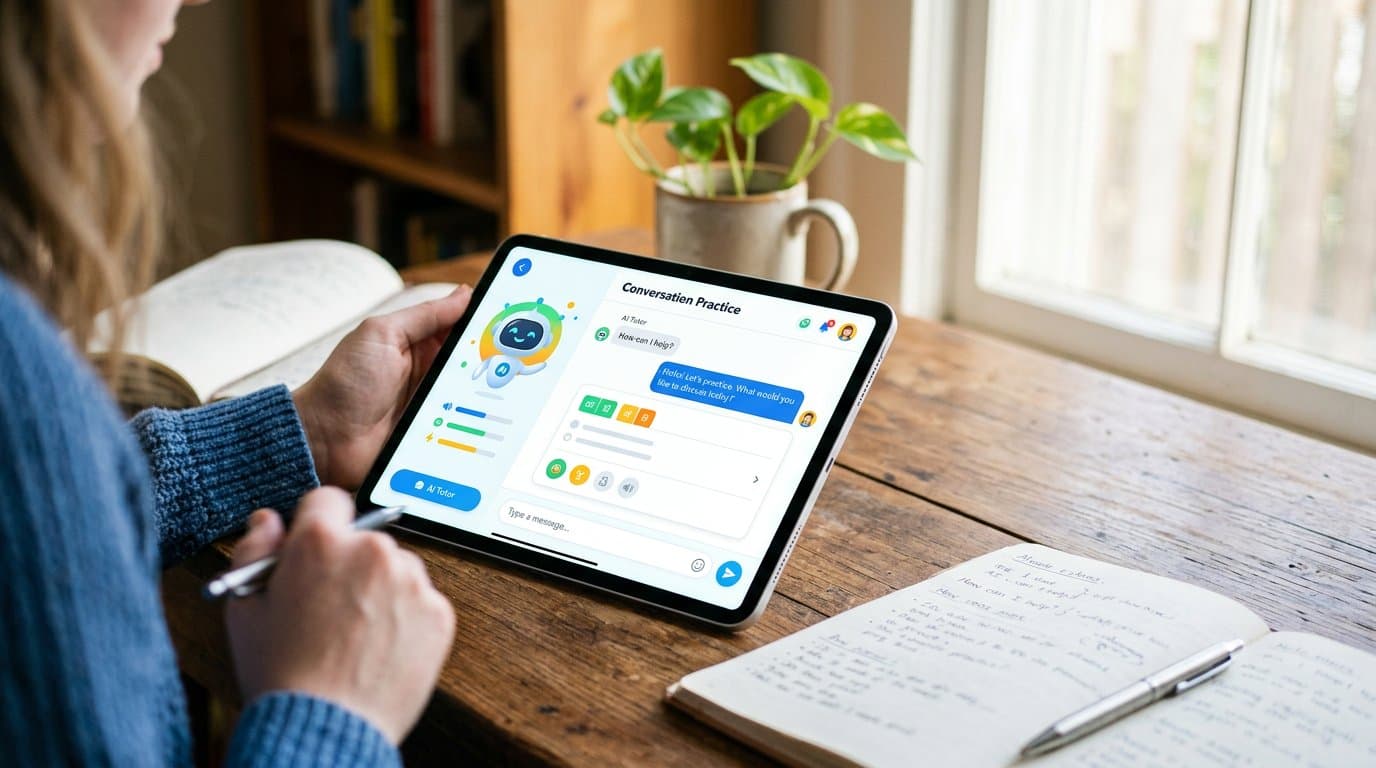
The landscape of language education is undergoing a seismic shift as multimodal artificial intelligence moves from simple text prompts to visual reasoning. "Image GPT" refers to the integration of advanced vision-language models into the learning process, allowing an AI English tutor to "see" and interpret visual data just as a human instructor would. For students preparing for high-stakes exams like the IELTS or TOEFL, this technology is transforming how they master complex visual tasks and real-world literacy.
The Evolution of Multimodal AI in Education
Historically, AI tutors were limited to text-based interactions. However, the release of multimodal systems has enabled AI to process images, charts, and handwritten text in real-time. According to Search Engine Land, the integration of AI is setting higher standards for how users interact with digital content, prioritizing depth and accuracy.
In the context of English learning, this means an AI can now analyze a photo of a restaurant menu to teach vocabulary or review a screenshot of a handwritten essay to provide grammatical corrections. This visual context bridges the gap between abstract rules and real-world application, which is essential for achieving high scores in international proficiency tests.
Mastering IELTS Writing Task 1 with Image GPT
One of the most daunting challenges for IELTS candidates is the Academic Writing Task 1, which requires describing visual information such as bar charts, line graphs, or process diagrams. According to the official IELTS scoring criteria, students are evaluated on "Task Achievement"—their ability to accurately summarize and highlight key trends.
An Image GPT-powered tutor can analyze the specific graph a student is looking at and provide targeted coaching on:
- Trend Identification: Recognizing a "peak," "fluctuation," or "plateau" within a data set.
- Lexical Resource: Suggesting precise academic verbs like "surged," "plummeted," or "remained constant."
- Coherence: Helping structure the report so that the overview and body paragraphs flow logically.
For those looking to refine these skills, acsent.ai offers specialized Writing practice that uses AI to score responses based on these exact criteria, providing the instant feedback necessary for rapid improvement.
Interactive Speaking Practice and Visual Cues
The IELTS Speaking test often utilizes visual prompts, particularly in Part 2, where candidates receive a "cue card." Traditional self-study makes it difficult to simulate this interaction. However, through acsent.ai, students can engage with a Speaking Hub that records their responses and evaluates fluency, pronunciation, and grammatical range.
By incorporating Image GPT capabilities, learners can also practice describing real-world scenes. The AI can present a complex image—such as a crowded city street—and prompt the student to describe the action. The AI then provides feedback on their use of prepositions, tenses, and descriptive adjectives. This multimodal approach is supported by Cambridge English, which emphasizes that visual aids significantly improve vocabulary retention and learner engagement.
Real-World Literacy and Immersion
For students preparing for immigration to countries like the UK, Canada, or Australia, English proficiency is more than just a test score; it is a survival skill. The UK Government and Immigration, Refugees and Citizenship Canada have strict language requirements for visa applicants that demand functional literacy.
Image GPT serves as a portable tutor for these individuals. A learner can take a photo of an official notice or a utility bill and ask the AI to explain the tone, identify the deadline, or define difficult terminology. This "in-the-wild" learning helps bridge the gap between classroom English and the functional English required for daily life in an English-speaking country.
Why Choose AI-Powered Platforms Like acsent.ai?
While general-purpose AI tools are helpful, specialized platforms like acsent.ai provide the structure and accuracy needed for formal exam preparation. acsent.ai bridges the gap between self-study and expensive professional coaching by offering:
- Exam-Grade Scoring: Unlike generic AI, the models at acsent.ai are calibrated to mirror British Council and IDP examiner standards.
- Full Mock Simulations: Students can take a full IELTS mock test to experience the pressure of timed sections and real question formats.
- Actionable Analytics: Instead of vague tips, users receive specific advice on which grammatical structures to vary and where their arguments lacked coherence.
As noted in current SEO trends for 2026, the shift toward AI-driven personalization is becoming the benchmark for high-quality digital experiences. acsent.ai applies this by ensuring every student receives a unique learning path based on their specific performance data.
The Future of Language Learning
As AI continues to evolve, the distinction between "learning a language" and "interacting with technology" will blur. Multimodal models ensure that learning is no longer confined to textbooks. By seeing the world through the student's eyes, an AI English tutor can provide a level of personalization that was previously impossible without a one-on-one human tutor.
Whether you are a student aiming for a Band 8.0 or a professional preparing for a move abroad, leveraging these tools is the most efficient path to success. You can start your journey today and practice for free at acsent.ai.
In conclusion, Image GPT represents a new frontier in digital education. By combining visual recognition with the linguistic depth of large language models, it provides a comprehensive, 24/7 tutoring experience. When paired with a dedicated exam-prep platform like acsent.ai, learners gain the tools, feedback, and confidence needed to master the English language and excel in their international exams.