The landscape of language education is undergoing a massive paradigm shift. For decades, students looking to master English relied on physical textbooks, audio cassettes, and expensive human tutors. Today, artificial intelligence has democratized this process, turning what used to be a static learning experience into an interactive, dynamic journey. At the heart of this transformation is advanced robot text to speech (TTS) technology.
Once confined to the metallic, unnatural cadences of early computing, modern robot TTS has evolved into a sophisticated tool capable of mimicking human emotion, intonation, and regional accents. This evolution has paved the way for highly effective AI English tutors, making language acquisition more accessible, affordable, and personalized than ever before. This trend aligns with broader shifts in digital content; as noted in recent SEO trends for 2026, AI influence and higher standards for user experience are fundamentally changing how we interact with information online.
The Evolution of the Robot Voice Text Reader
In the early days of digital learning, using a text to speech robot voice was often more distracting than helpful. These early systems used concatenative synthesis, stitching together fragments of recorded speech. The result was a choppy, robotic delivery that lacked proper emphasis, making it difficult for language learners to grasp the natural rhythm, stress, and intonation of spoken English.
Today, the technology behind a robot voice TTS system relies on deep learning and neural networks. These advanced models analyze vast datasets of human speech to understand how sentences are structured, where pauses should naturally occur, and how tone changes based on context. As a result, the modern robot voice text reader provides an incredibly lifelike auditory model for students, which is essential for developing authentic pronunciation and listening comprehension.
For creative educators and developers, the technology has even expanded into niche and gamified variations. Some platforms allow users to generate stylized audio to create engaging listening comprehension games or unique audio prompts for younger learners. Whether generating standard academic English or specialized sound bites, the flexibility of modern audio generation has fundamentally changed how educational content is produced.
Why AI English Tutors Are Essential for Modern Learners
Mastering English requires continuous practice, particularly in high-stakes environments like international university admissions or global workforce integration. Educational bodies such as the British Council emphasize that consistent exposure to authentic spoken English is critical for achieving high levels of language proficiency. However, many students face significant barriers, including a lack of native speakers to practice with and the high cost of private tutoring.
This is where an AI English tutor bridges the gap. By integrating advanced robot text to speech with generative AI, digital tutors offer several distinct advantages:
- 24/7 Availability: Learners can practice speaking and listening at any time of day, removing the scheduling conflicts associated with human coaches.
- A Judgment-Free Environment: Many language students suffer from "foreign language anxiety." Practicing with an AI allows them to make mistakes, experiment with pronunciation, and build confidence without fear of embarrassment.
- Immediate, Data-Driven Feedback: Unlike a human tutor who might give generic encouragement, an AI system can analyze pronunciation, grammar, and vocabulary usage instantly, offering precise corrections.
For students preparing for standardized examinations, these benefits are invaluable. The official guidelines from ETS highlight the importance of structured preparation for exams like the TOEFL, where spoken clarity and listening comprehension are heavily scrutinized.
Revolutionizing High-Stakes Exam Prep with acsent.ai
While generic robot text to speech tools are helpful for basic reading, specialized exam preparation requires a much more targeted approach. Standardized English tests like the IELTS evaluate candidates on highly specific criteria, including fluency, lexical resource, and grammatical accuracy. To succeed, students need a platform that simulates real exam conditions and provides professional-grade evaluation.
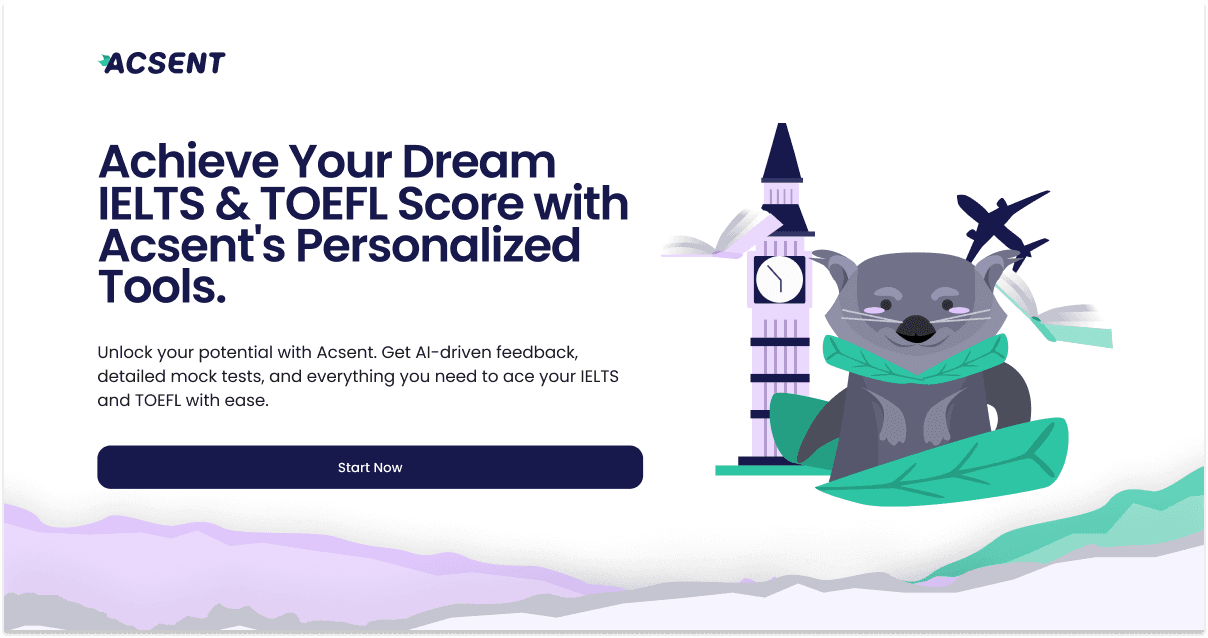
This is exactly what acsent.ai offers. Designed as a comprehensive AI-powered IELTS and TOEFL preparation platform, acsent.ai lets students practice all four core language skills—Listening, Reading, Writing, and Speaking—with instant AI scoring that mirrors real examiners.
Perfecting the Speaking Component
Many students struggle with the speaking portion of proficiency exams because they lack a reliable feedback loop. With the AI-powered Speaking Hub at acsent.ai/question-bank/ielts/speaking, candidates can practice Part 1, Part 2 (cue cards), and Part 3 questions. The platform evaluates responses based on the official criteria used by organizations like IELTS.org, analyzing pronunciation, grammatical range, and fluency without the pressure or cost of a human examiner.
Mastering Listening Comprehension
Developing a sharp ear for different English accents and speeds is crucial for exam success. Instead of relying on static audio files, modern platforms use advanced voice synthesis to generate diverse listening exercises. Students can sharpen their skills by utilizing the realistic audio recordings available for targeted practice at acsent.ai/question-bank/ielts/listening, which covers all standard exam question types under simulated test conditions.
Moving Beyond Static Learning Paths
Traditional language courses often follow a rigid, one-size-fits-all curriculum. However, language acquisition is highly individualized; one student might excel at reading but struggle with writing coherence, while another might have excellent vocabulary but poor pronunciation.
AI-driven platforms solve this problem through adaptive learning paths. For instance, before a student begins studying, diagnostic placement tests can identify specific weak areas. For educational institutions and language schools, acsent.ai features a specialized Module & Block learning system. This allows teachers to assign specific topics, track institutional performance via centralized dashboards, and run automated mock test sessions that help students understand exactly where they stand on the official 0–9 band score scale.
This structured, analytical approach shifts the focus from studying harder to studying smarter. Instead of receiving generic feedback like "improve your vocabulary," students are given exact recommendations on which words to replace, which grammatical structures to vary, and where their arguments lose logical flow. You can experience this level of targeted, instant feedback on your essays by practicing at acsent.ai/question-bank/ielts/writing.
The Future of AI in Language Education
As neural text to speech and conversational AI continue to advance, the line between human instruction and digital tutoring will become increasingly blurred. Future systems will offer even greater conversational fluidity, adapting their emotional tone and vocabulary complexity to match the learner's real-time emotional state and proficiency level. This evolution reflects the SEO trends for 2026 that predict a shift toward more personalized, AI-driven user interactions across the web.
For immigrants navigating complex visa requirements via portals like Canada.ca or Australia's Department of Home Affairs, as well as students aiming for top-tier international universities, these AI tools represent an affordable, tier-one preparation strategy. By combining the accessibility of robot TTS with the analytical precision of examiner-trained AI models, learners worldwide are breaking down geographical and financial barriers to master the English language. Take control of your test preparation today and take a free IELTS mock test at acsent.ai/test.