The landscape of language acquisition has shifted from heavy textbooks to interactive, intelligence-driven ecosystems. Google AI tools have become a central pillar for students worldwide, offering everything from instant translations to real-time conversational practice. As search engines evolve into "answer engines," the role of a free AI site or a Google AI research tool has expanded, providing learners with unprecedented access to linguistic data and feedback.
The Evolution of Google AI Tools for Language
Google’s foray into artificial intelligence has fundamentally changed how we interact with the English language. Tools like Gemini and the newly integrated "Talk mode" in Circle to Search are transforming Android devices into portable language labs. According to recent SEO and AI search trends, the shift toward AI-first search experiences means that learners now receive concise, structured answers to complex grammar queries directly within search results.
For those preparing for standardized tests, these general tools serve as a powerful foundation. A student can use a Google AI research assistant to understand the nuances of the "present perfect" tense or use YouTube’s AI-generated captions to improve listening comprehension. However, while Google provides the "what" and the "how" of the English language, specialized platforms are often required to bridge the gap between general fluency and exam readiness.
Using Gemini as a Personal AI English Tutor
Gemini, Google’s advanced AI assistant, functions as an always-available tutor. It can role-play scenarios, explain idiomatic expressions, and summarize long-form articles to aid reading comprehension. Despite these strengths, general AI often lacks the specific "rubric awareness" needed for high-stakes exams.
For instance, while Gemini can check your grammar, it may not evaluate your essay based on the official IELTS band descriptors provided by ielts.org. This is where specialized tools like acsent.ai provide a necessary edge. While you use Google to research topics, acsent.ai allows you to submit writing tasks and receive instant scoring based on Task Achievement and Coherence, mirroring the exact standards used by human examiners.
Specialized Practice with acsent.ai
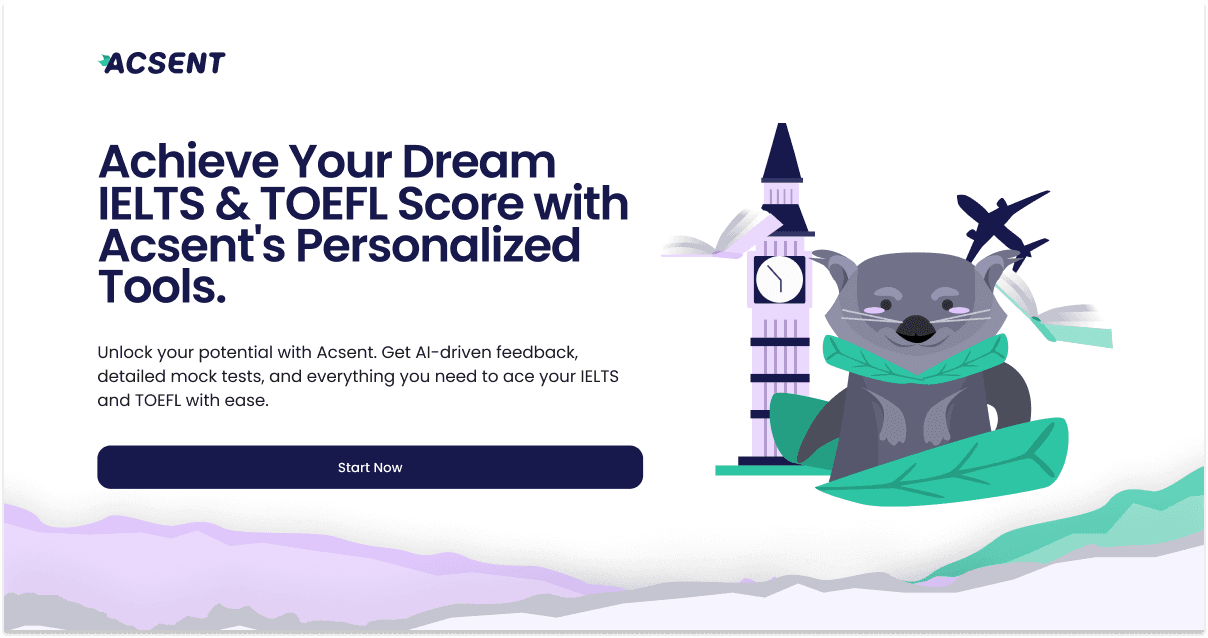
While Google offers a broad "free AI site" experience, acsent.ai is a dedicated AI-powered IELTS and TOEFL preparation platform. It allows students to practice the four core skills—Listening, Reading, Writing, and Speaking—with the precision of a professional coach.
AI-Powered Speaking and Writing
One of the greatest hurdles for English learners is the lack of a non-judgmental partner for speaking practice. acsent.ai features a Speaking Hub where students can record responses for all three parts of the IELTS Speaking test. The AI evaluates fluency, pronunciation, and lexical resource, providing a band score estimate that helps students understand their standing before the actual test date.
Similarly, the AI-scored Writing practice at acsent.ai moves beyond simple spell-checking. It analyzes grammatical range and accuracy, offering actionable feedback on how to improve specific sentences to reach a higher band.
The Importance of Full Mock Test Simulations
Success in English proficiency exams is as much about stamina and time management as it is about language skill. Google AI tools are excellent for "micro-learning" sessions, but they do not replicate the pressure of a three-hour exam.
Platforms like acsent.ai offer full mock test simulations that replicate the end-to-end experience of the exam as administered by the British Council. These simulations include:
- Timed sections for all four modules.
- Realistic question formats.
- Instant, comprehensive performance analytics.
By combining the research capabilities of a Google AI research tool with the targeted simulation of acsent.ai, students can identify their weak points and focus their energy where it matters most.
Integrating AI into Your Study Routine
To maximize the benefits of modern technology, students should adopt a hybrid approach. Start by using Google Search and AI Overviews to gather information and clarify grammar rules. Use Gemini to draft practice dialogues and expand your vocabulary.
Once the foundational knowledge is set, transition to exam-specific training. You can practice for free at acsent.ai to see how your skills translate into actual scores. This data-driven approach ensures that you aren't just "studying harder," but studying with a clear understanding of the official scoring criteria required by universities and immigration authorities.
The Future of AI Learning Environments
As we move toward 2026, the integration of AI in education is becoming more seamless. Industry experts predict that AI will continue to raise the standards for personalized content, making "tutor-like" experiences the norm. For English learners, this means more interactive videos, better voice recognition, and hyper-personalized feedback loops.
Whether you are a professional seeking a visa for Australia or a student aiming for a top-tier university, the combination of Google’s vast information network and acsent.ai’s specialized scoring provides a complete toolkit for success. The barrier to entry for high-quality English coaching has never been lower, allowing anyone with an internet connection to achieve their target scores.
In conclusion, Google AI tools offer an incredible starting point for general English immersion and research. However, to truly master the requirements of the IELTS or TOEFL, students need the specialized, rubric-aware feedback provided by acsent.ai. By leveraging both, you can turn your device into a comprehensive AI English tutor that guides you from basic fluency to exam mastery. Try AI-powered IELTS Speaking practice at acsent.ai today and experience the future of language learning.